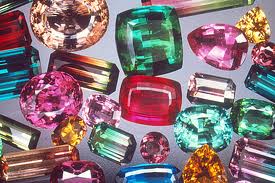


Tourmaline is a crystal boron silicate mineral compounded with elements such as aluminium, iron, magnesium, sodium, lithium and potassium. Tourmaline is semi precious stone and comes in a wide variety of colors. The name is derived from the Sinhalese word “Thuramali” or “Thoramalli” which applied to different gemstones found in Sri Lanka.
Tourmaline varies from transparent to translucent and exists in a variety of colors. Tourmalines rich in iron vary from black or bluish-black to deep brown. Those rich in magnesium vary from brown to yellow. The tourmalines rich in lithium may be of any color: blue, green, red, yellow, pink, etc. Tourmaline is rarely colorless.
Tourmaline species and varieties:
Dravite species – dravite – dark yellow to brownish black from Drava district of Carinthia.
Schorl species – schorl – bluish or brownish black to black
Elbaite species named after Elba Italy
Rubellite – red or pinkish red
Schorl – dark black
Brazilian Indicolite light blue to bluish green
Braziliam emerald variety green verdelite
Achroite variety – colorless
Bi-colored and multicolored crystals are common, reflecting on the variations of fluid chemistry during crystallization. Crystals may be green at one end and pink at the other, or green on the outside and pink inside. This type of tourmaline is called watermelon tourmaline. Some forms of tourmaline exhibit Dichroism. They change color when viewed from different directions.
The pink color of tourmalines from many fields is the result of a continued natural irradiation. Initially they are by nature very pale. During their growth, these tourmalines acquire pink to red color.